

Emotional Experience-based Game Prompts
2 min read
`https://combos.fun/play?release_id=101
1. Usage scenarios
When you wish to generate a:
- does not aim for clearance, victory or defeat, or numerical values
- Emphasizes emotions, atmosphere, and psychological feelings more
- Suitable for short-term experiences, festivals, or cultural theme mini-games
This case is very suitable as a starting point. Its core value lies in: clearly telling Boo that this is not a game "to be won" .
2. Key points of success
- The experience goal is pre-defined: From the very beginning, it is clearly emphasized that this is "a brief dream-like interactive experience", rather than a traditional game goal, and the Agent will proactively avoid mechanisms such as scoring and failure conditions.
- Emotion precedes gameplay: The overall tone, rhythm, and psychological experience are first described clearly, and specific gameplay only serves emotional expression rather than dominating the experience in reverse.
- Highly restrained information expression: It does not explain the meaning of symbols, does not guide player behavior, and does not provide real-world advice. This "blank space" itself is part of the rules, effectively avoiding over-explanation by the system.
3. Core stable structure
When reusing this case, the following structure is recommended to be retained as much as possible:
- Abstract symbols as the main interactive objects
- Selection behavior with a clear upper limit on quantity
- The text content is more about emotions and psychological states rather than event prediction
- A clear conclusion, rather than a looped gameplay
These structures together form theskeleton of the dream-like experience, and once too many systems or feedback are introduced, the experience can easily be pulled back to a "functional game".
4. Replaceable and extensible directions
Can be safely replaced without disrupting the experience framework:
- Cultural Background (Japanese First Dream → Dream Cultures in Other Regions)
- Scene carriers (game background → murals → water surface / clouds / paper, etc.)
- Abstract symbol themes (natural imagery, emotional imagery, etc.)
- Text tone (more poetic / more restrained / more psychological)
These changes mainly affect emotional style, rather than interaction logic.
5. Common issues and fixes
- The generated results have become "divination tools" or "psychological tests" Usually, the text provides overly explicit judgments or suggestions, and it is necessary to re-emphasize: do not predict real-world events, do not guide actions, and only describe emotional states.
- The gameplay has become like a multiple-choice question or questionnaire indicating that the interactive feedback is too strong, so numerical changes and visual rewards can be weakened, leaving only subtle light effects or vibrations.
- The rhythm is too fast, lacking a sense of "experience". It can be corrected by slowing down the speed of text appearance and reducing the number of operations, rather than adding content.
9. Example prompt
*.Plain
Develop a “Hatsuyume (First Dream)” themed experiential mini-game for the Japanese market. The overall tone should be tranquil, soothing, and subtly mysterious, emphasizing a “dreamlike fleeting interaction experience” rather than progression or competition.
【Overall Art and Atmosphere】
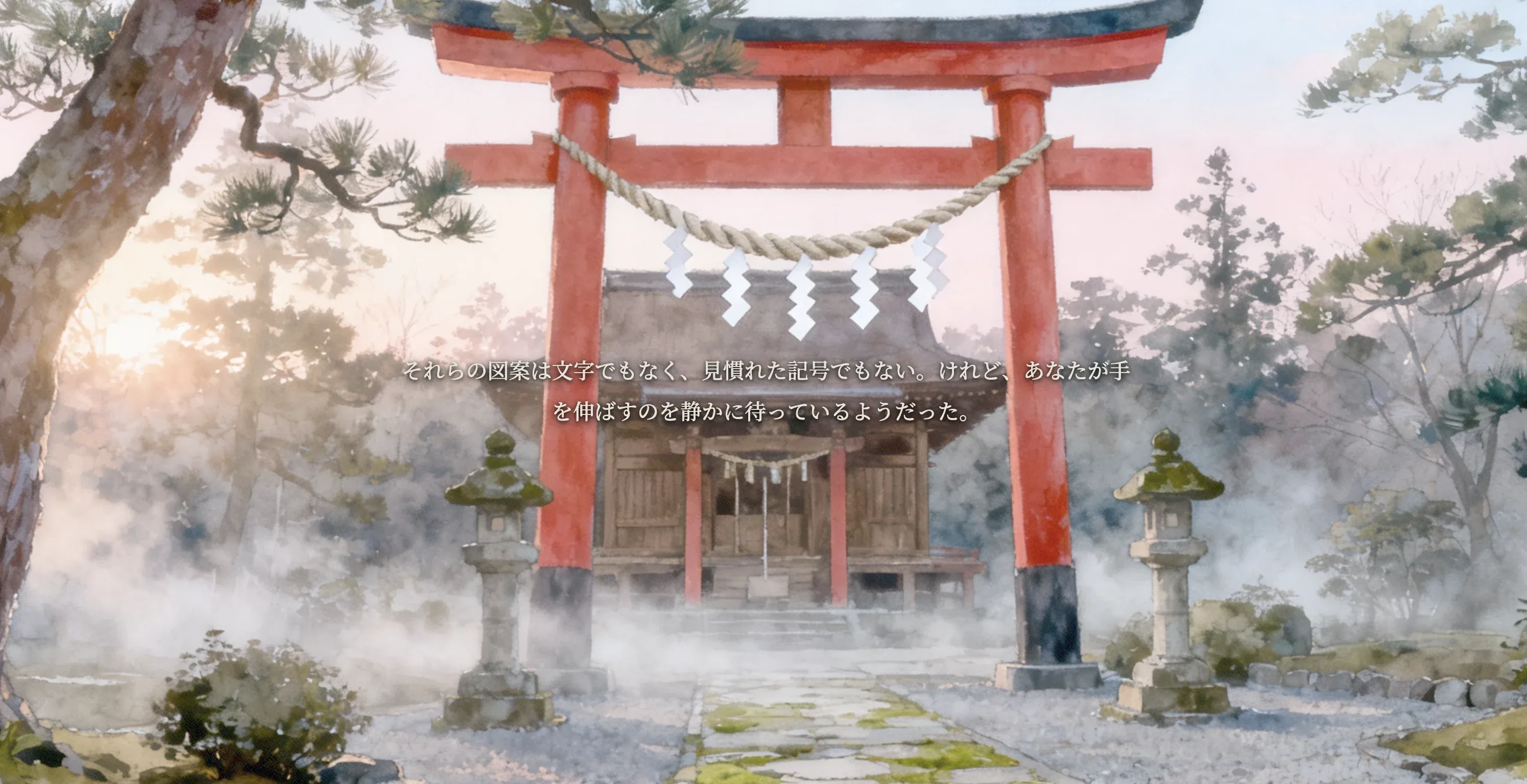
Adopt a Japanese-style healing illustration aesthetic with soft, low-saturation colors and ample negative space. Lighting simulates early morning natural light—subtle, tranquil, and free of harsh contrasts. The environment contains no characters or human activity, featuring only the sound of wind, shifting light, and the passage of time to cultivate an intimate, attentive atmosphere.
【Worldview and Background Guidance Interface】
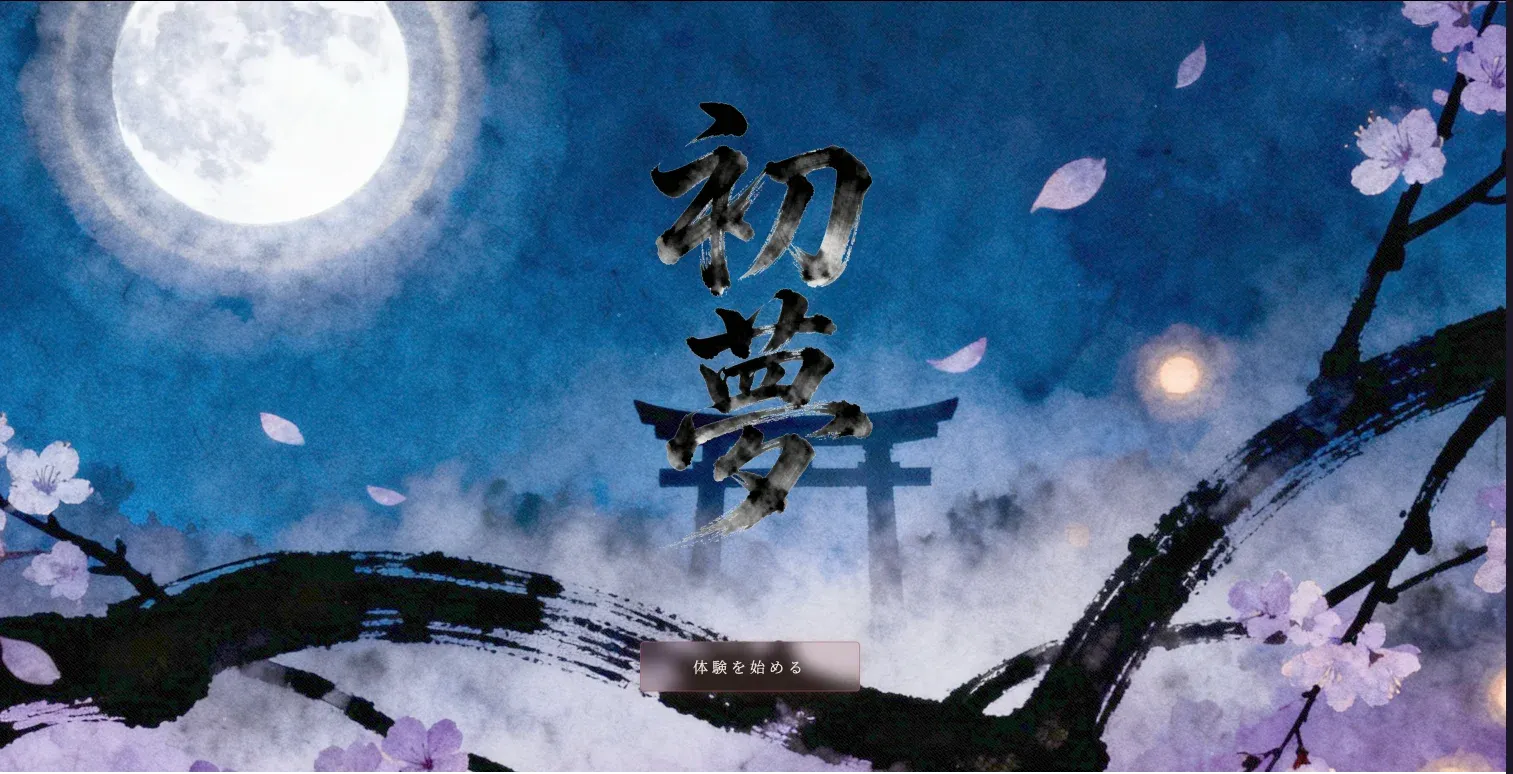
In the background, the characters “初夢” (Hatsuyume) slowly appear before fading away. A door-like structure gradually enlarges and blurs, eventually merging into the background to transition into the main game interface.
Before the game begins, a slowly unfolding background introduction appears, with text fading in line by line:
Before dawn, you arrive at the Foot of the Mountain's First Dream Shrine.
Here, there are no incense offerings, nor any other worshippers,
only the faint whisper of wind flowing gently between the stone steps.
Standing beneath the shrine, you offer a quiet prayer to the unknown deity—
May the start of this year bring a gentle, beautiful dream.
Just as you lower your head,
an ancient mural behind the shrine
quietly reveals strange patterns.
They resemble neither text nor familiar symbols,
yet seem to wait silently for your touch.
You sense vaguely—
this isn't the deity responding,
but the dream itself, listening to your words.
【Core Scene】
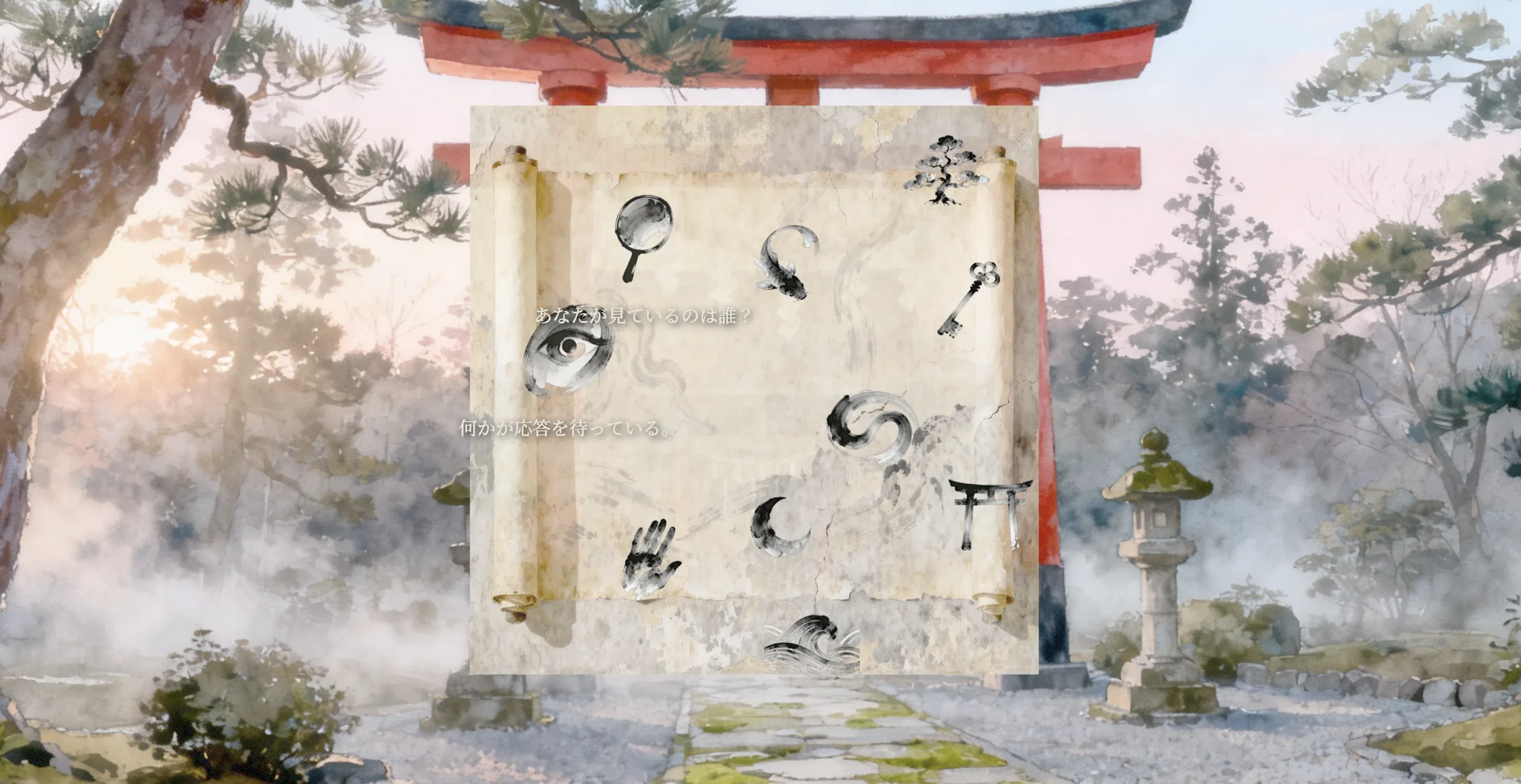
 The game's main screen depicts an ancient mural inside or behind the shrine. Ten abstract symbols are randomly scattered across the mural, positioned irregularly and out of alignment, giving a sense of “natural emergence.” Symbol themes include but are not limited to: “moon, door, eye, shoe, fish, hand, line.” These symbols are concrete yet do not directly convey meaning. Initially, there are no explanations or hints, and all symbols remain static.
【Gameplay Rules (Briefly prompted upon entering the main interface)】
Players may select up to 3 symbols that most captivate them on the mural. Each symbol clicked emits a faint glow or subtle vibration. Players can choose a maximum of 3 symbols; once selections are made, further clicks are disabled.
【Dream Text Style】
Each sentence is no longer than 20 characters. Avoid phrases like “you should” or “you must.” Do not directly predict real-world events or future outcomes. Maintain an emotional, ambiguous, and open-ended tone.
【Combination and Divination Result Generation】
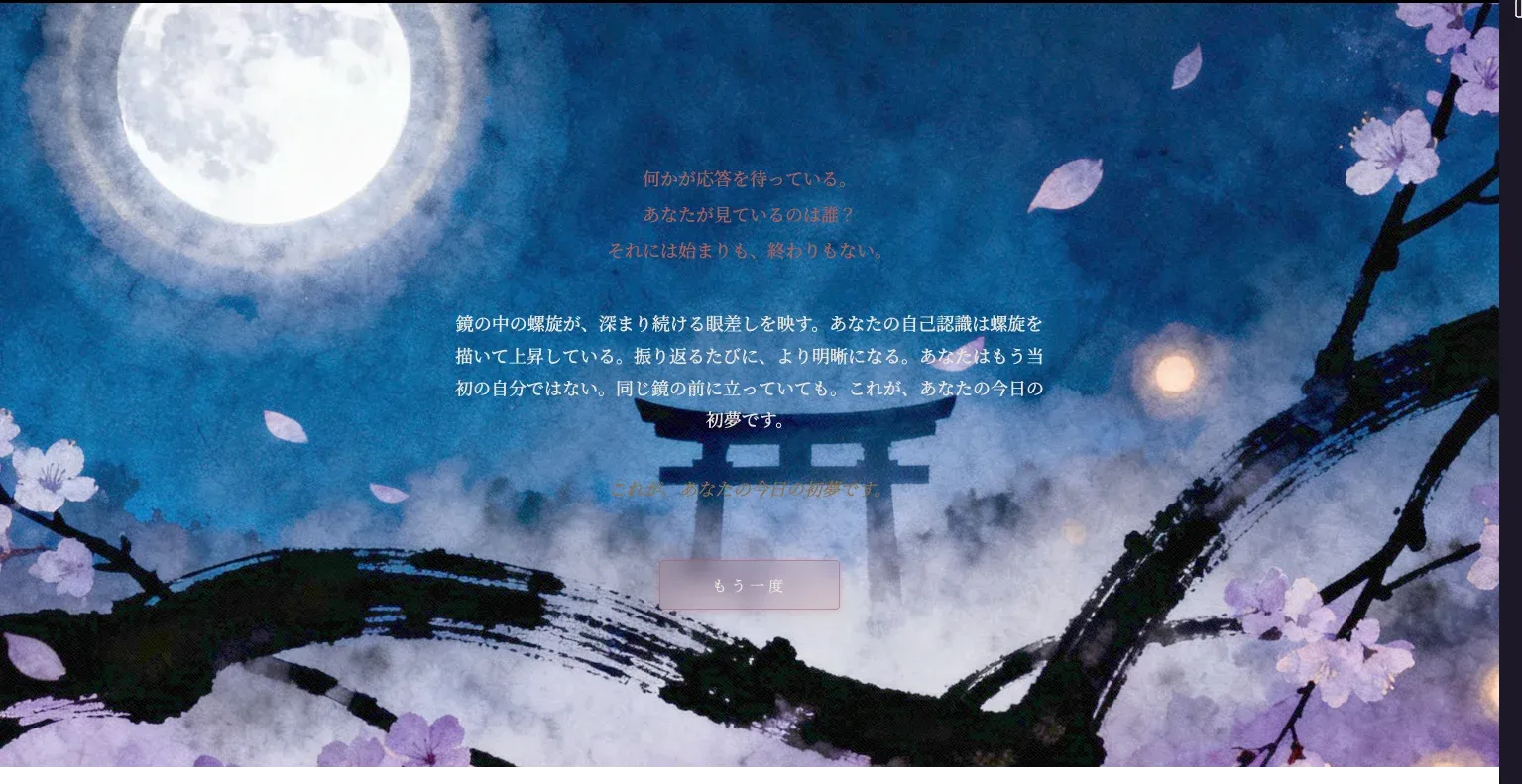
After the player completes 3 selections: The screen gradually dims, the mural begins to blur, and the 3 dream texts that appeared earlier simultaneously emerge. The system generates a beautiful, dreamlike, psychologically-oriented divination interpretation based on the emotional tendencies of the selected symbols and corresponding text (e.g., waiting, hesitation, relaxation, avoidance, flow, protection).
Interpretation Content: Describes the player's current psychological state or emotional trajectory without pointing to specific events, making judgments, offering advice, or guiding actions. Different symbol combinations produce distinctly different interpretation texts.
【Conclusion】
After the divination text concludes, the game ends with a brief, restrained closing line, such as:
- “This is your first dream of the day.”
【Overall Goal】
To deliver a dreamlike interactive experience where players feel “heard and responded to” within an extremely short timeframe—like a lingering dream upon waking, requiring no understanding yet leaving a lasting impression.